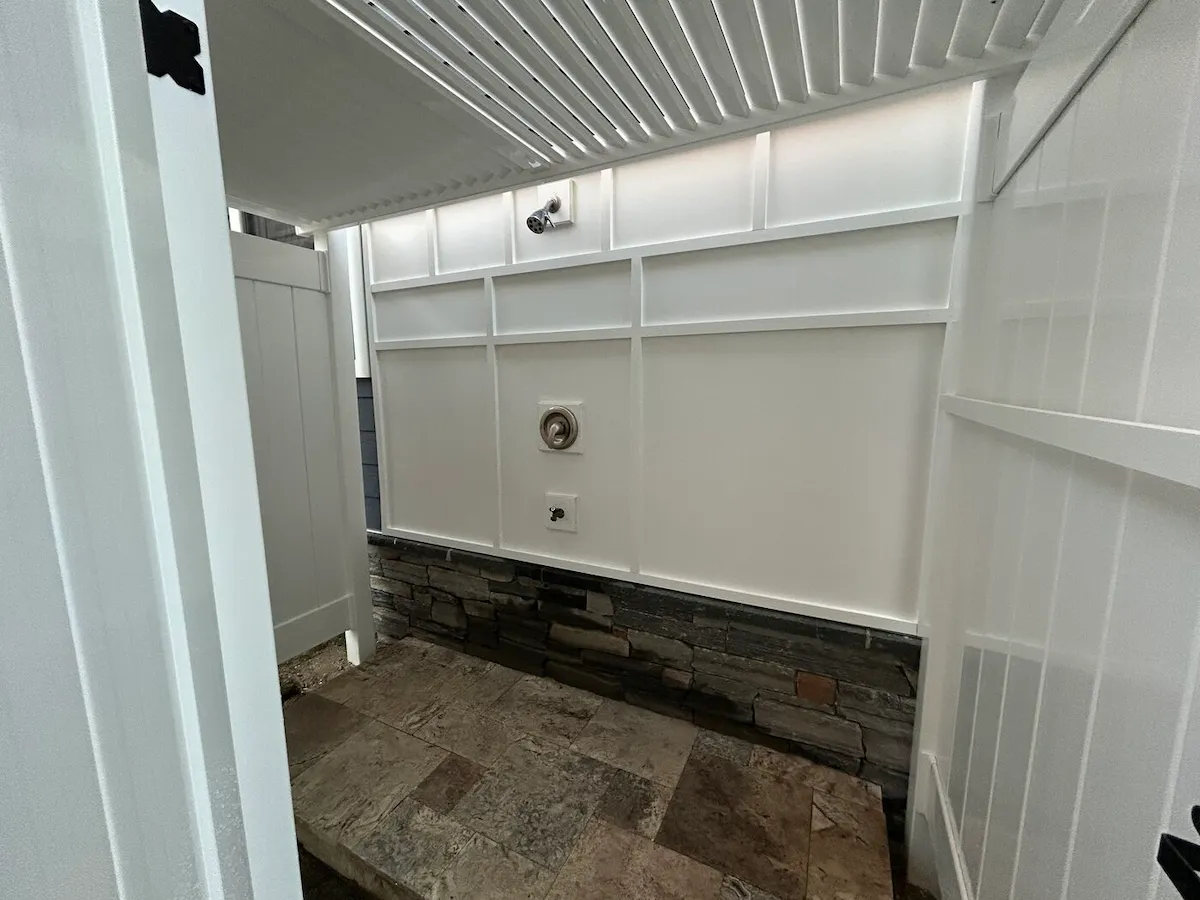
Best Materials for Outdoor Showers in Saltwater Environments
Choosing the wrong material for your outdoor shower is one of the most common and costly mistakes Jersey Shore homeowners make. What works fine inland falls apart fast in a saltwater coastal environment — and shore properties are particularly demanding: constant salt air, direct sun exposure, sandy abrasion, freeze-thaw cycling, and high humidity combine to destroy materials that weren't designed for it.
After building hundreds of outdoor showers from Cape May to LBI, here's our honest assessment of every major material option.
Vinyl: The Workhorse of the Shore
Vinyl is the most popular outdoor shower enclosure material on the Jersey Shore, and for good reason. It's essentially impervious to the coastal environment — salt air, UV rays, and moisture do virtually nothing to quality vinyl over time. It doesn't rot, doesn't need painting, doesn't corrode, and stays looking clean with minimal effort.
Pros: Maintenance-free, salt-resistant, UV-stabilized, long lifespan (20+ years with normal care), wide color availability, cost-effective. Vinyl also holds paint poorly — which sounds like a drawback but is actually a plus, because it means it always looks the same and you're never repainting it.
Cons: Not as aesthetically warm as wood options. High-quality vinyl is fine; cheap vinyl can become brittle over time with UV exposure. You get what you pay for — specify virgin vinyl, not recycled content.
Best for: Homeowners who want zero maintenance and reliable performance. The vast majority of our shore installations are vinyl for this reason.
Trex Composite: Premium Look, Low Maintenance
Trex and other composite decking materials have become extremely popular for outdoor shower floors and privacy panels over the last decade. The material offers a convincing wood-look aesthetic without the maintenance burden of real wood, and it holds up extremely well in coastal environments.
Pros: Highly durable, excellent salt and UV resistance, no splintering or rotting, warm aesthetic, textured surface is slip-resistant (critical for shower floors), wide color range. Trex is specifically engineered for outdoor use in demanding environments.
Cons: More expensive than vinyl upfront. Gets hotter in direct summer sun than wood (a consideration for shower floors on south-facing builds). Composite can expand and contract seasonally, so proper gapping during installation is critical.
Best for: Upscale shore properties where aesthetics matter and low maintenance is valued. Our Margate and Avalon builds lean heavily toward Trex.
IPE Hardwood: The Gold Standard
IPE (pronounced ee-PAY) is a Brazilian tropical hardwood so dense it's nearly impervious to rot, insects, and moisture. It's the material used on the Coney Island boardwalk, and it's considered the highest-end option for outdoor shower builds.
Pros: Extraordinary durability and lifespan (40+ years properly maintained), stunning natural appearance, extremely hard and dense, naturally resistant to rot and insects without chemical treatment, acquires a beautiful silver-gray patina if left unsealed or can be kept warm brown with annual oiling.
Cons: Premium cost — IPE is significantly more expensive than vinyl or Trex. Requires annual oiling to maintain the warm brown color (though many homeowners prefer the natural silver patina and simply leave it unsealed). Heavy and hard to work with, requiring experienced installation. Sourcing should be from FSC-certified suppliers to ensure responsible forestry.
Best for: Homeowners who want the absolute best and are prepared to invest accordingly. IPE is a showpiece material — it makes a statement.
Cedar: Classic but Demanding
Western red cedar has been used for outdoor showers on the Jersey Shore for generations. It has natural oils that resist rot and insects, it's beautiful, and it works well. But it requires consistent maintenance to hold up in a saltwater environment.
Pros: Natural beauty, cost-effective relative to IPE, workable with standard tools, pleasant natural scent, relatively lightweight.
Cons: Requires annual sealing or staining to prevent graying, splitting, and weathering in a saltwater environment. Salt air accelerates degradation. In our experience, cedar builds that aren't properly maintained look rough in 5–7 years and can start to fail structurally in 10–15. This is the material where the second-home problem really shows up — if you're not there to maintain it, it won't maintain itself.
Best for: Homeowners who use the property frequently, enjoy the maintenance as part of shore ownership, and like the authentic wood aesthetic. Board-and-batten cedar with a painted finish can extend the life significantly.
Tile and Stone Floors: Non-Negotiable Quality Factors
For shower floors, the enclosure material matters less than the tile or stone choice and the quality of the installation underneath. Here's what we see perform best:
Travertine: Extremely popular, natural look, durable, slip-resistant when honed or brushed. Works beautifully in coastal settings. Requires sealing annually to prevent staining and moisture penetration — particularly important for outdoor applications.
Pebble/River Rock: Exceptional drainage, coastal aesthetic, naturally textured and slip-resistant. Great choice for an organic, natural look. Installation requires good waterproofing beneath and proper grout to prevent weed growth.
Porcelain Tile: The most durable floor option. Frost-resistant porcelain rated for outdoor use handles freeze-thaw cycling better than natural stone. Low maintenance, wide design options. Specify outdoor-rated with a coefficient of friction (COF) of 0.60 or higher for wet areas.
What to avoid: Indoor tile, unsealed natural stone, or anything not specifically rated for wet outdoor use in a freeze-thaw climate. We've demolished and replaced many floors that were originally done with the wrong product.
Hardware and Fixtures: The Often-Overlooked Factor
Your enclosure material choice matters — but so does hardware quality. Salt air destroys cheap fixtures fast. Specify:
- Solid brass or stainless steel fixtures, not chrome-plated zinc
- 316 marine-grade stainless for exposed hardware (hinges, latches, screws)
- Concealed fasteners where possible to minimize corrosion exposure
- Pressure-balancing or thermostatic valves for safety and longevity
Our Recommendation by Budget
Entry-level ($3,000–$6,000): Vinyl enclosure with a poured concrete or basic tile floor. Durable, low-maintenance, clean look. Does everything you need it to do.
Mid-range ($6,000–$12,000): Vinyl or Trex enclosure with travertine or pebble floor, quality fixtures, louvered roof. This is the sweet spot for most shore homeowners — great performance and aesthetics.
Premium ($12,000+): IPE enclosure with custom stone floor, rain shower head, bench, LED lighting, and full privacy enclosure. A showpiece that adds real property value.
Not Sure What's Right for Your Property?
We'll come to your shore property, look at the space and your home's existing style, and help you find the right material and design for your budget.
Get a Free Estimate